Safety
Do you have a pet first-aid kit? You should.
Deborah Finnell
⏱️ 3 min read
👁️ 515 views
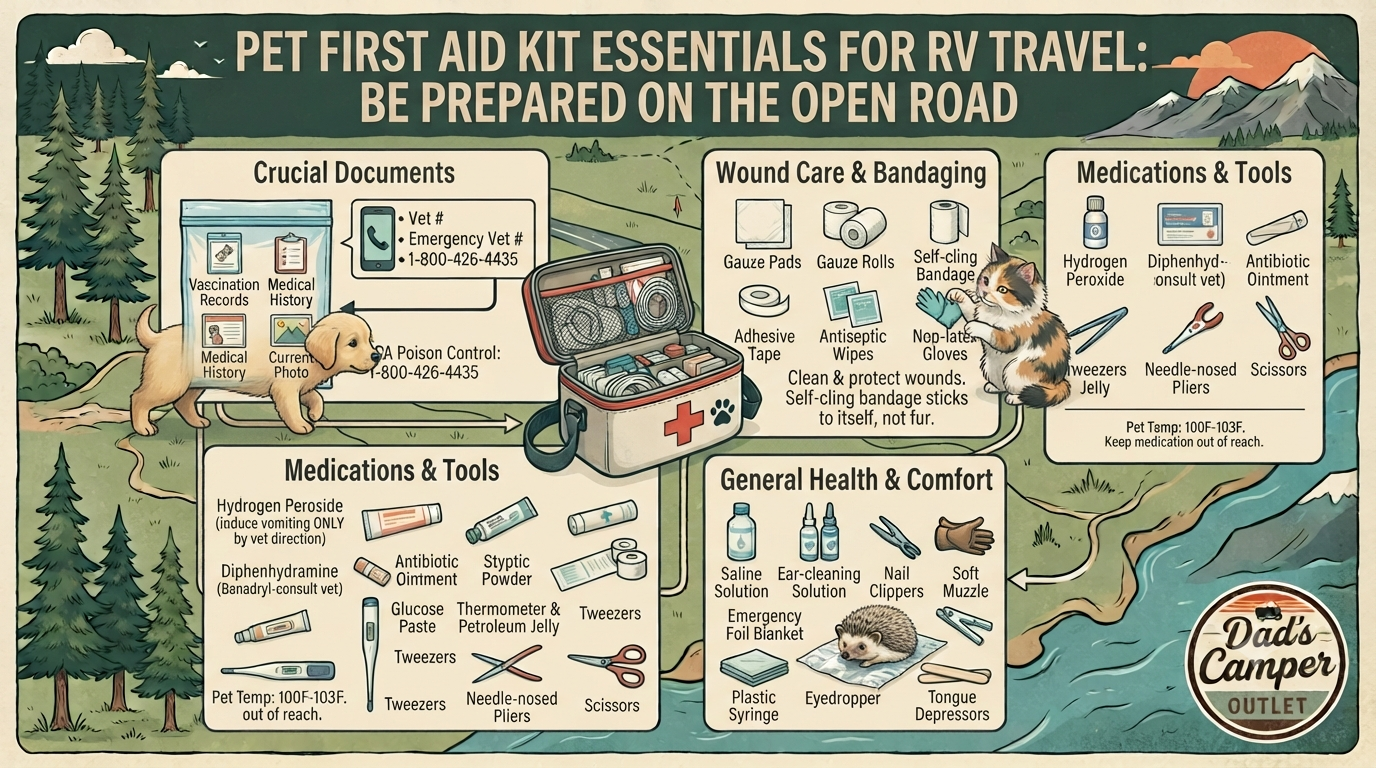
Traveling with your pet is one of the joys of owning an RV. Conscientious pet owners should always have a pet first aid kit somewhere accessible when traveling with their pet. This guide lists the basic items you will need to have in your pet first aid kit.
Pet first-aid book
Phone numbers: your veterinarian, the nearest emergency-veterinary clinic and a poison-control center or hotline (such as the ASPCA poison-control center, which can be reached at 1-800-426-4435)
Paperwork for your pet (in a waterproof container or bag): proof of rabies-vaccination status, copies of other important medical records and a current photo of your pet (in case he or she gets lost)
Nylon leash
Self-cling bandage (bandage that stretches and sticks to itself but not to fur)
Muzzle or strips of cloth to prevent biting (don't use this if your pet is vomiting, choking, coughing or otherwise having difficulty breathing)
Absorbent gauze pads
Adhesive tape
Antiseptic wipes, lotion, powder or spray
Blanket (a foil emergency blanket)
Cotton balls or swabs
Gauze rolls
Hydrogen peroxide (to induce vomiting; do this only when directed by a veterinarian or a poison-control expert)
Ice pack
Non-latex disposable gloves
Petroleum jelly (to lubricate the thermometer)
Rectal thermometer (your pet's temperature should not rise above 103F or fall below 100F)
Scissors (with blunt ends)
Sterile non-stick gauze pads for bandages
Sterile saline solution (sold at pharmacies)
Tweezers
A pillowcase to confine your cat for treatment
A pet carrier
Other useful items
Diphenhydramine (Benadryl), if approved by a veterinarian for allergic reactions. A veterinarian must tell you the correct dosage for your pet's size.
Ear-cleaning solution
Expired credit card or sample credit card (from direct-mail credit-card offers) to scrape away insect stingers
Glucose paste or corn syrup (for diabetic dogs or those with low blood sugar)
Nail clippers
Non-prescription antibiotic ointment
Penlight or flashlight
Plastic eyedropper or syringe
Rubbing alcohol (isopropyl) to clean the thermometer
Splints and tongue depressors
Styptic powder or pencil (sold at veterinary hospitals, pet-supply stores, and your local pharmacy)
Temporary identification tag (to put your local contact information on your pet's collar when you travel)
Towels
Needle-nosed pliers
In addition to the items listed above, include anything your veterinarian has recommended specifically for your pet. Check the supplies in your pet's first-aid kit occasionally and replace any items that have expired.
For your family's safety, keep all medical supplies and medications out of the reach of children and pets.
Found this helpful? Share it with fellow RV enthusiasts:
Written by